In June 2014, we launched The MIniclick Press with the plan to publish affordable books on photographers side project, experimental works and archives. We started off with 5 books by Brighton based photographers.
Here we take a closer look at Jean-Luc Brouard’s “Seeing the Unseen Scene” (which can be purchased here), with writer Bryony Good.
‘This world is a place of wrapping, of hints, of concealment.’
It has been said that the best photographs lead the mind to visually fill in the gaps, inspiring a narrative in the viewer’s mind. Seeing the Unseen Scene however, shows us what our mind is usually left to imagine. Behind the scenes at London Fashion week is a work of polishing, fixing, trimming and highly structured plans and timings. It is this moulding of people and places to meet the creative visions of the few that is beautifully recorded in Jean-Luc’s collection of candid and atmospheric images. Intricate hairstyles and headpieces show the time and effort that goes into a production of that stature. Alongside the glamour, we get a glimpse of a lone chair, or the reverse of a wooden panel; we are back stage, experiencing the construction of a performance.

The first thing I notice about these images is that all the faces are hidden. Hats, hoods and hair hide the faces of the people who are being preened into pieces of art. It’s this act of concealment that portrays the theatre of hide and seek the fashion industry puts on for us: the wrapping of each model in clothes and make up to present the most beautiful of gifts.
This exploration of the facade is perfectly mirrored in the short story by John Morrison that accompanies these photographs. John writes a story that delicately entices us to explore the relationship between concealing and decorating.

Narrated from the point of view of an English language tutor, the story tells us of the difficulties teaching an eastern woman pronunciation with a surgical mask on. The descriptions of teaching methods and the boundaries they overcome are so precise, so intricate that it’s easy to believe the tutor’s obsession with the challenge.
‘However frustrating I found that mask and the hours of classes that felt like we weren’t getting anywhere, I had become utterly fixated on improving her pronunciation and it almost felt heart-breaking that I had to finish our lessons.’
The text explores the different ways in which people choose to hide and reveal certain elements of themselves, for the teacher it’s the adoption of a larger than life persona when teaching, for the student, it’s a more physical covering of the face.
‘I suppose we were both covering ourselves, masking our true personalities for the sake of avoiding social discomfort. It was a fake clash of personalities. A friendly cycle of deceit.’
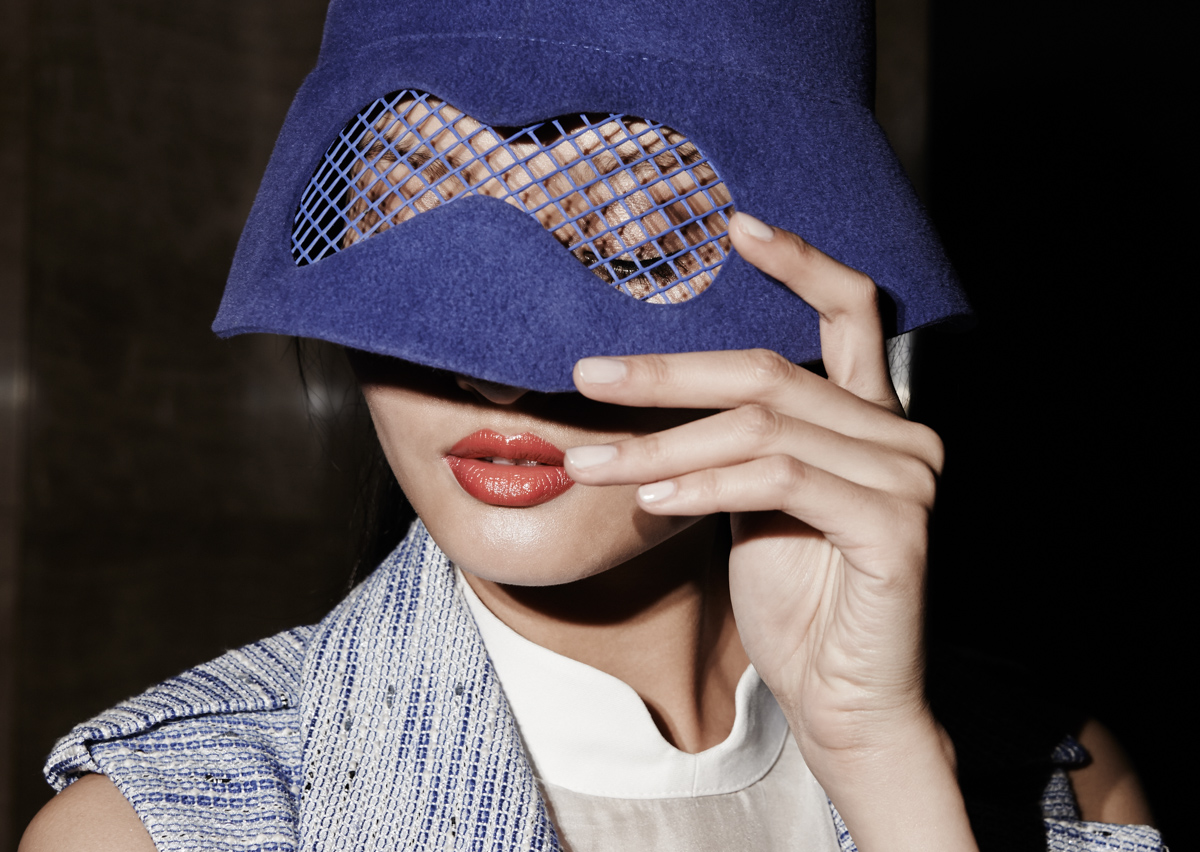
The ideas of construction are explored through the dressed up figures in the photographs, the masks worn, and the relationship that’s built within the narrative. The efforts the tutor goes to are reminiscent of the laborious efforts, the love and obsessions, which construct the wrapping in the photographs. The book as a whole explores the efforts that go into creativity, the transformation of one thing, a person or a place into something beautiful.
 The Miniclick Photo Talks